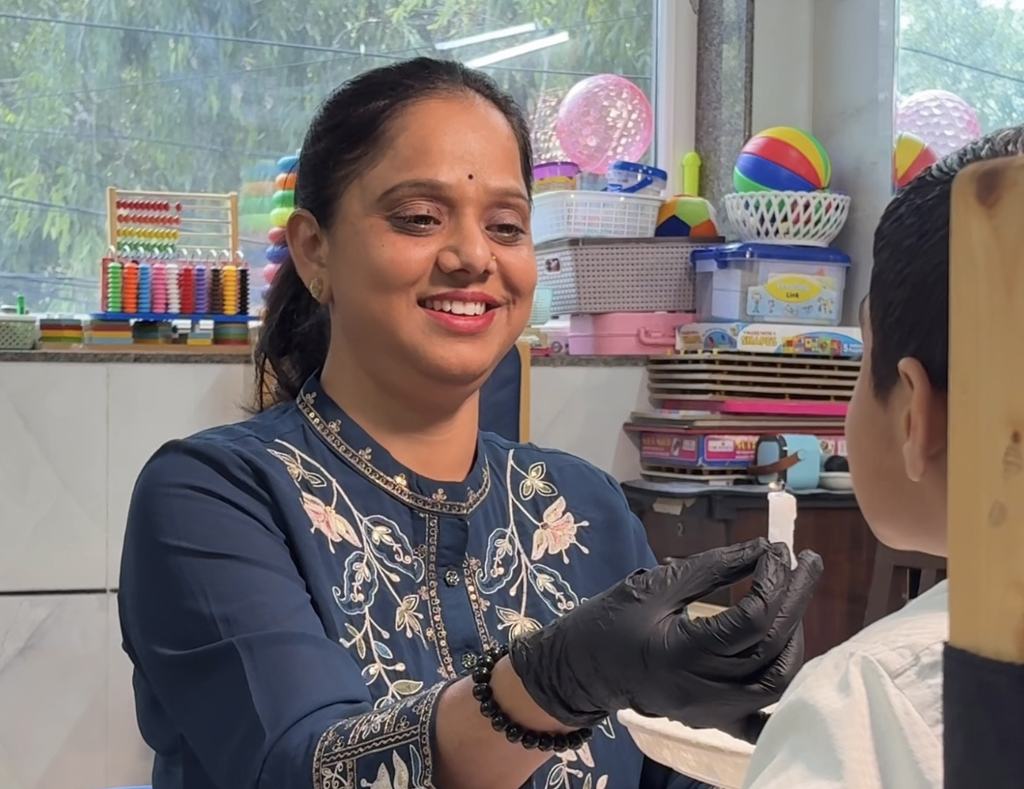
Introduction: The Silent Question Every Parent Asks
As parents, few things are as eagerly awaited as our children’s first words. But when milestone markers pass with only pointing, gestures, or single sounds, a quiet worry begins to set in:
“Is my child just a late talker, or is this a speech delay?”
“Will they catch up on their own, or should we see a specialist?”
At Krit Sankalp Child Development Center in Paschim Vihar, we hear these questions every single day. The most important message we share with parents is simple: If you’re concerned about your child’s communication, don’t panic and don’t ignore it; get the right professional guidance and understand your child’s individual needs.
Every child grows at their own pace, but understanding their communication milestones early can make all the difference.
1. The Biggest Misconception: “Speech Therapy is Only About Pronunciation“
One common misconception parents have is that speech therapy is only about teaching a child to pronounce words correctly.
In reality, at our Child Development Center near Meera Bagh, Paschim Vihar, we help children develop communication, language, speech clarity, fluency, social communication, and other skills needed to express themselves and interact with others. Speech therapy can involve much more, including understanding language, expressing thoughts, building vocabulary, developing sentences, and learning how to communicate socially.
Speech therapy nurtures the whole child, helping them find the confidence to connect with the world around them.
2. The Waiting Trap: “My Child Will Start Talking Eventually“
One of the most common mistakes parents make is waiting too long because they believe their child will automatically catch up. While every child develops at their own pace, that doesn’t mean every delay should simply be ignored.
You do not have to wait until a speech problem becomes severe before seeking professional guidance. Instead of worrying or comparing your child with others, seeking a professional assessment can help you understand where your child is currently developing and whether support may be beneficial.
3. Key Signs It’s Time for a Developmental Assessment
Consider scheduling an evaluation if you notice that your child:
- Is significantly behind expected communication milestones.
- Struggles to express themselves or is difficult to understand.
- Stammers or stutters frequently.
- Has difficulty communicating socially or interacting with others.
- Experiences unclear pronunciation.
(Note: We also offer support for adults who need help with speech, language, fluency, or communication difficulties).
4. What Really Happens During the First Assessment?
Parents often worry that an evaluation will feel clinical or overwhelming.
At Krit Sankalp Child development Center, the first assessment focuses on understanding your child’s communication and developmental history. Our qualified speech-language professionals observe how your child communicates, understands language, expresses themselves, interacts with others, and uses speech.
Based on this assessment, the therapist can identify areas that need support and recommend an appropriate therapy plan. Because we believe every child is different, we don’t follow the exact same approach for everyone; we develop goals according to their individual needs.
5. Can a Speech Therapist Diagnose Autism?
A common concern for parents is autism. A speech therapist can identify communication and social-communication characteristics that may be associated with autism, but diagnosing autism requires a broader developmental assessment.
A speech therapist may contribute valuable information to the assessment process and recommend evaluation by appropriate medical or developmental professionals when autism is suspected. If autism is suspected, a speech therapist can assess areas such as communication, language, social interaction, understanding, expression, and functional communication, and provide therapy to develop these skills based on the child’s needs.
5. Can a Speech Therapist Diagnose Autism?
A common concern for parents is autism. A speech therapist can identify communication and social-communication characteristics that may be associated with autism, but diagnosing autism requires a broader developmental assessment.
A speech therapist may contribute valuable information to the assessment process and recommend evaluation by appropriate medical or developmental professionals when autism is suspected. If autism is suspected, a speech therapist can assess areas such as communication, language, social interaction, understanding, expression, and functional communication, and provide therapy to develop these skills based on the child’s needs.
6. What Should Parents Ask During a Consultation?
When choosing a speech therapist, parents should look for a properly qualified professional, relevant experience, a thorough assessment process, individualized therapy goals, clear communication, and a supportive environment like our 1-on-1 sessions at Krit Sankalp.
During the first consultation, be sure to ask:
- What is my child’s main communication concern?
- What did the assessment show?
- What therapy goals will we work on?
- How often should therapy happen?
- How can we support the child at home?
- How will progress be monitored?
- Does my child need another specialist’s evaluation?
The Takeaway for Parents
At our speech clinic, one of the most rewarding parts of our work is seeing a child move from struggling to communicate to expressing their needs, thoughts, and feelings more confidently. Even small milestones, such as saying a new word or initiating communication, can mean a lot to the child and their family.
An assessment can help identify whether there is actually a concern and what kind of support, if any, would be appropriate.
Need Guidance? Book a Free Consultation at Krit Sankalp Speech Child Development Center
Located conveniently in Paschim Vihar (near Meera Bagh), Krit Sankalp Child Development Center offers a free consultation to help you understand your child’s needs. We provide personalized 1-on-1 sessions in a child-friendly and safe environment led by experienced therapists.
Click Here to Book Your Free Consultation & Milestone Assessment or call our clinical desk at